Writings
Green technology and income inequality: an empirical analysis of US metro areas
Nicolò Barbieri, Davide Consoli, Giovanni Marin and François Perruchas
Regional Studies, 2023
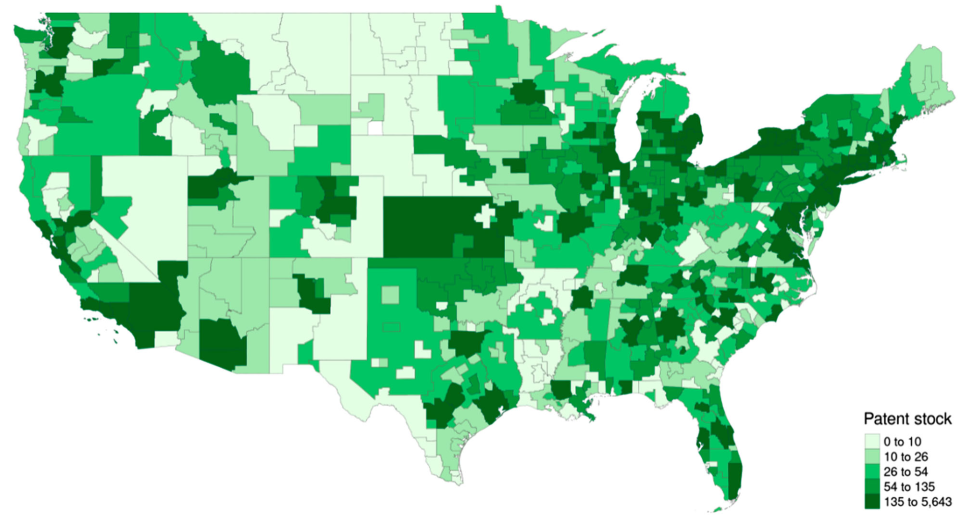
Climate change is a global phenomenon with markedly local manifestations. Accordingly, territories differ in terms of exposure to climate events, of capacity to adopt climate mitigation policies and of the welfare effects that these deep transformations entail. The paper brings together these threads with an empirical study of the relationship between green technology development and income inequality in US metropolitan areas over the period 2005–15. We find a positive association between local patenting capacity and growing income gaps to the detriment of the least affluent. Further, higher patenting propensity in early-stage technologies has a stronger association with income inequality, whereas such a relationship dissipates at later stages of the life cycle.
Regional technological capabilities and green opportunities in Europe
Nicolò Barbieri, Davide Consoli, Lorenzo Napolitano, François Perruchas, Angelica Sbardella and Emanuele Pugliese
The Journal of Technology Transfer, 2023, 48, 749
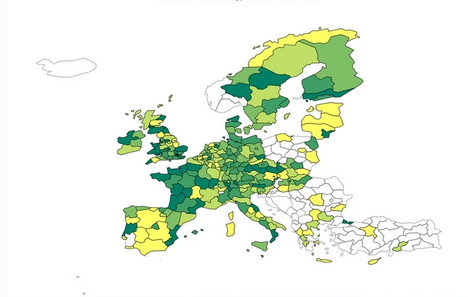
The goal of the paper is to elaborate an empirical overview of green technological development in European regions. This is a timely pursuit considering the ambitious commitments stipulated in the recent European Green Deal to achieve climate neutrality by 2050. Our analysis is organised in three steps. First, we map the geographical distribution of innovative activities in Europe and profile regions in terms of technological capabilities. Second, we elaborate a metric to identify regions’ green innovation potential. Third, we check whether possessing a comparative advantage in specific, green and non-green, technological domains is associated with a region’s capacity to develop green technologies.
Green innovation and income inequality: A complex system analysis
Lorenzo Napolitano, Angelica Sbardella, Davide Consoli, Nicolò Barbieri and François Perruchas
Structural Change and Economic Dynamics, 2022, 63, 224
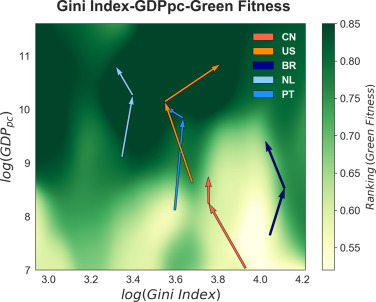
The objective of this paper is to analyse the relationship between income inequality and environmental innovation. To this end, we use the Economic Fitness and Complexity algorithm to compute an index of green inventive capacity in a panel of 57 countries over the period 1970–2010. The empirical analysis reveals that, on average, inequality is detrimental to countries’ capacity to develop complex green technologies. Using non-parametric methods we further articulate this general finding and uncover interesting non-linearities in the relationship between innovation and inequality.
Specialization, diversification and environmental technology life-cycle
Nicoló Barbieri and François Perruchas and Davide Consoli
Economic Geography 2020, 96 (2), 161
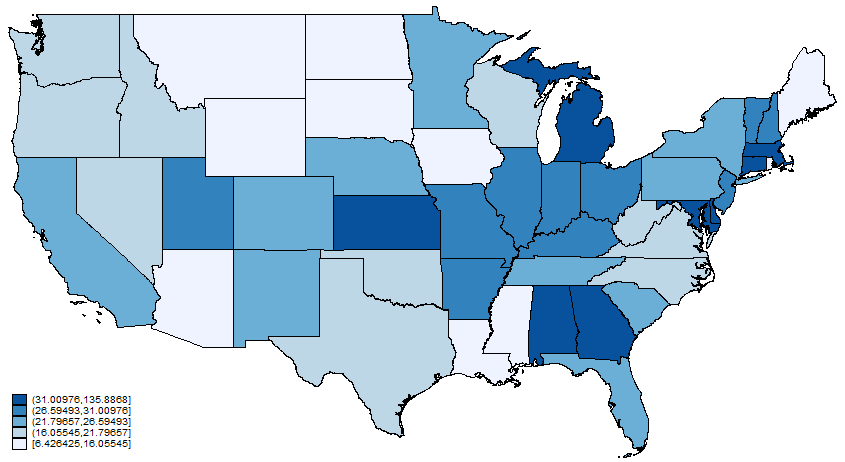
The paper analyses whether and to what extent regional related and unrelated variety matter for the development of green technology, and whether their influence differs over the technology life-cycle. Using patent and socio-economic data on a thirty- year (1980-2009) panel of US States, our study finds that unrelated variety is a positive predictor of green innovative activities. When unpacked over the life cycle, we find that unrelated variety is the main driver of green technology development in early stages while related variety becomes more prominent as the technology enters into maturity.
Specialisation, Diversification and the Ladder of Green Technology Development
François Perruchas, Davide Consoli and Nicolò Barbieri
Research Policy 2020, 49 (3)
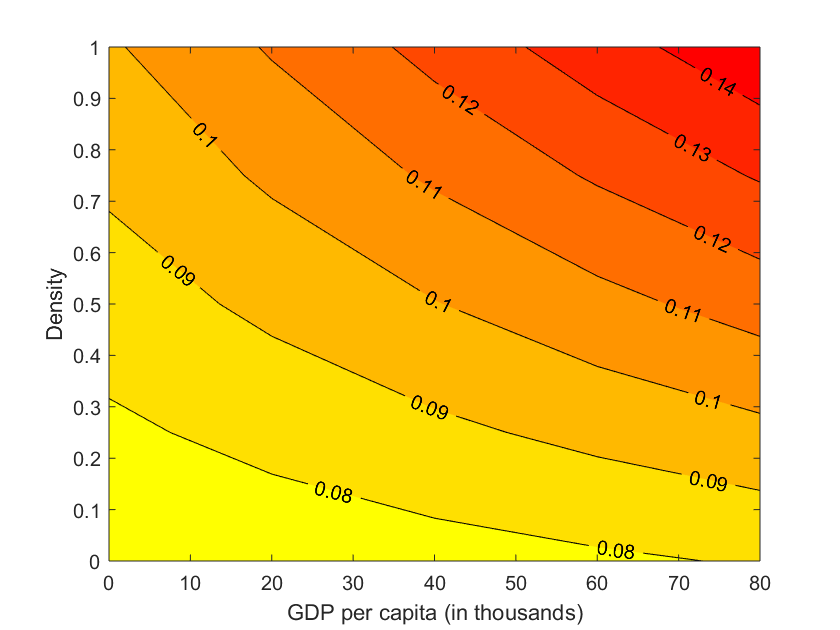
This paper elaborates an empirical analysis of the temporal and geographical distribution of green technology, and on how specific country characteristics enable or thwart environmental inventive activities. Using patent data on 63 countries over the period 1970-2012 we identify key drivers of cross-country diversification and specialization. Our first finding is that countries diversify towards green technologies that are related to their existing competences. Notably, the maturity of the green technology matters more than the level of development of each country. The second main result is that countries move along cumulative paths of specialization, and towards more complex green technologies. Interestingly, the complexity of green technologies is not an obstacle to further specialisation. The latter holds also for developing countries that are most exposed to climate change hazards.
Public Procurement, Local Labor Markets and Green Technological Change: Evidence from US Commuting Zones
Gianluca Orsatti, François Perruchas, Davide Consoli and Francesco Quatraro
Environmental and Resource Economics 2020, 75, 711
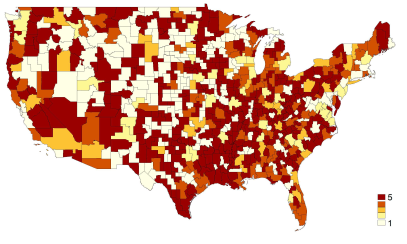
The present paper investigates whether and through which channels green public procurement (GPP) stimulates local environmental innovation capacity. To this end, we use detailed data sources on green patents and procurement expenditure at the level of US Commuting Zones for the period 2000-2011. We also check for the moderating effects of local labor market composition in the relation between green public procurement and green innovation capacity. Lastly, we exploit the richness of patent information to test for differential effects of green public procurement on different classes of green technologies. The main finding is that GPP is an important driver in explaining the growth of local green-tech stock. The positive effect of GPP is mainly driven by expenditures for procured green services and is magnified by the local presence of high shares of abstract- intensive occupations. When separately considering diverse kinds of green technologies, we do find evidence of a more pronounced effect of GPP on the growth of local knowledge stocks of mitigation technologies.